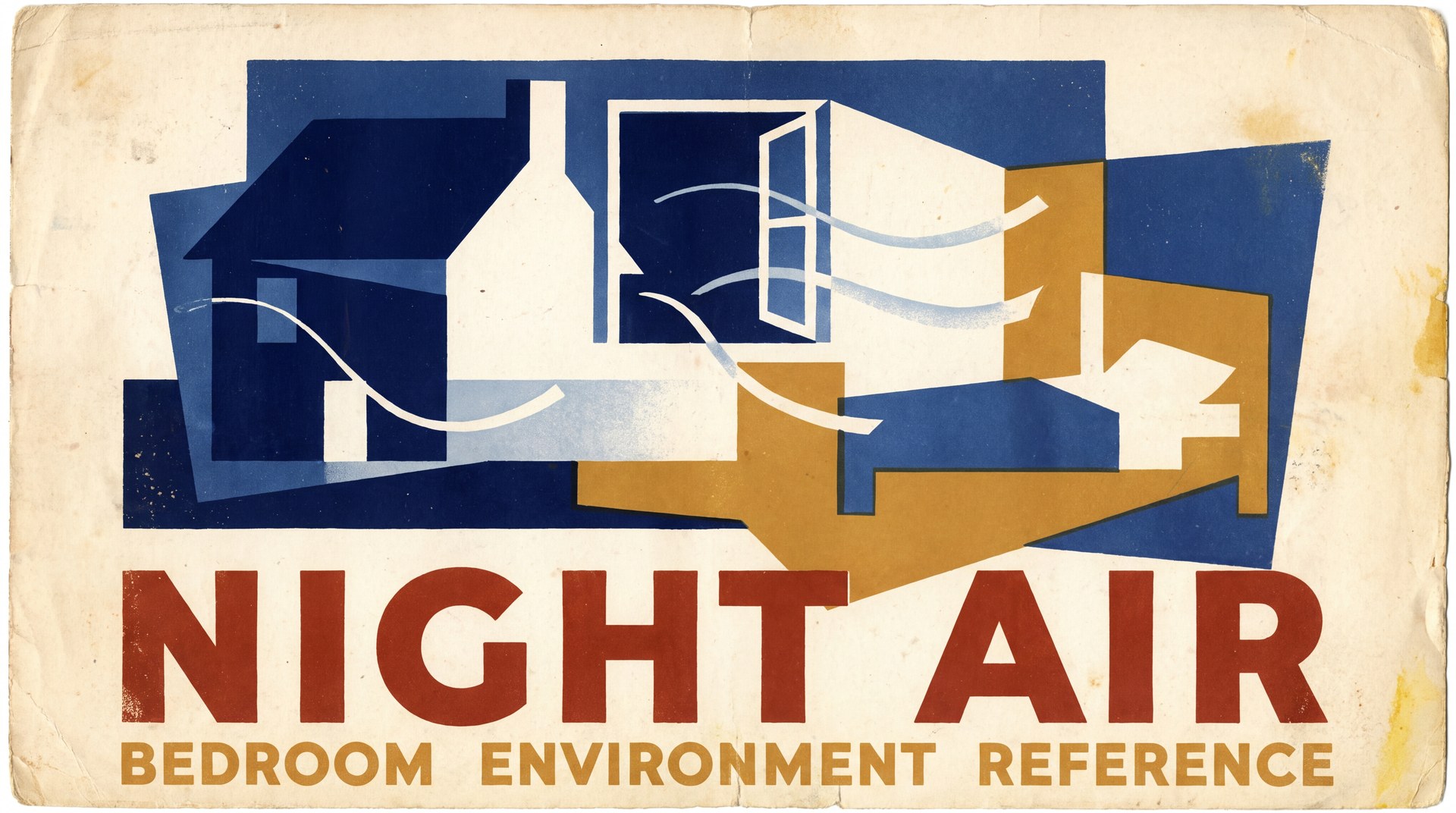
Night AirThe room above the bed
Almost all sleep advice concerns the bed, and almost none of it concerns the air, light and sound of the room around it, which is where a sleeper spends every one of those eight hours.
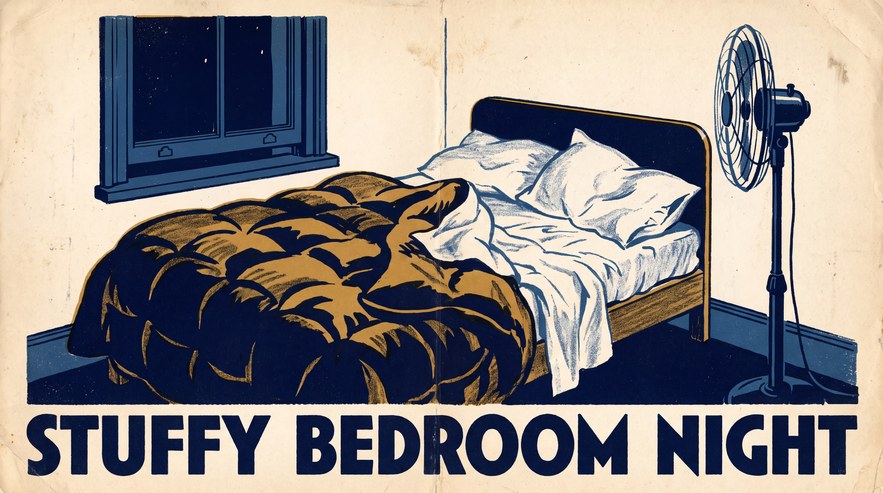
Five conditions of a room
All five topicsBedroom temperature
The overnight curve, the published room settings for adults, older adults and babies, and when the coldest hour arrives.
02Bedroom moisture
Humidity through a closed-door night, condensation on cold glass, and the humidity dust mites need.
03Bedroom air
Carbon dioxide in a shut room, winter ventilation and its heat cost, and what a home VOC monitor can tell you.
04Light and sound
Light at the pillow, curtains and shades, the noise levels agencies publish, and masking sound.
Guides
Every guide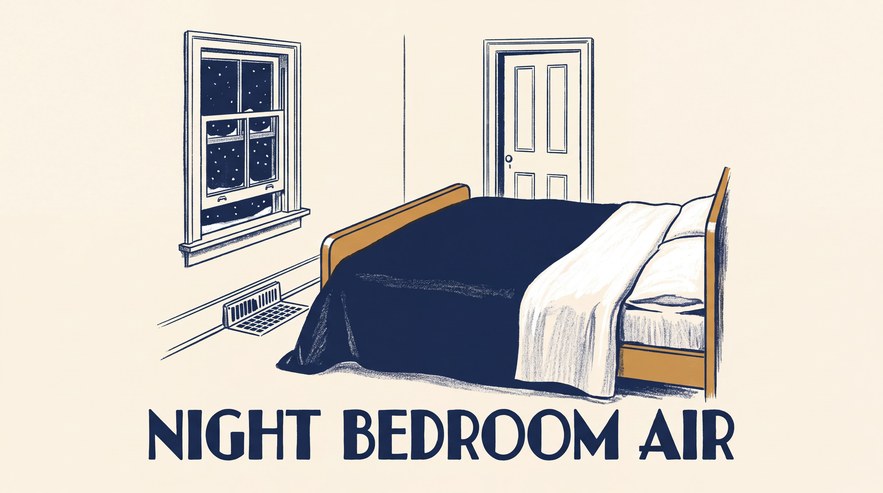
When is the coldest time of night, and what does bedroom air do between midnight and 5am?
On a clear, calm night the coldest time comes shortly after sunrise, not in the middle of the night. It usually lands 15 to 30 minutes after the sun is up. Until then, bedroom air answers to three pulls: the cooling outdoors, the heating schedule and the sleepers' own heat.
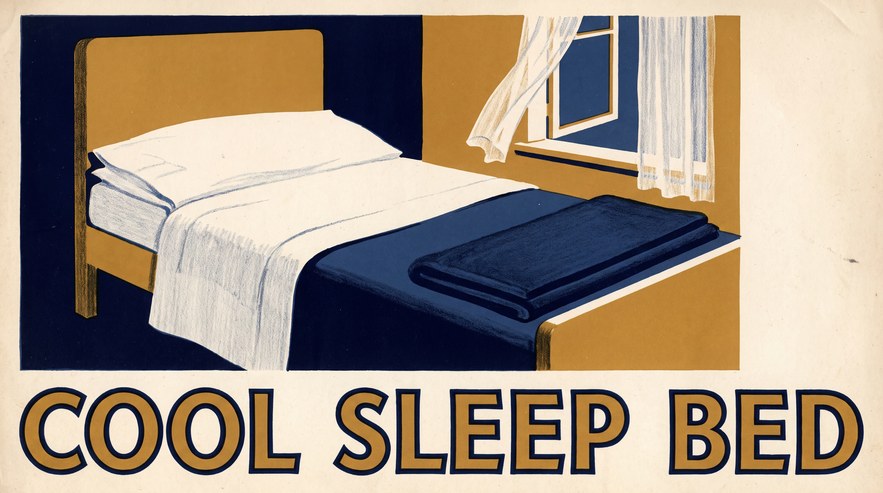
What bedroom temperature do sleep studies and health agencies point to?
Health agencies, hospitals and sleep studies point to a cool bedroom, and nearly every adult figure they publish falls between 60 and 68°F. This page sets those figures side by side for adults, older adults and babies. It converts them to Fahrenheit and shows where the sources part ways, so the number you set on the thermostat has a named source behind it.
How does bedroom humidity change overnight, and what range do agencies publish?
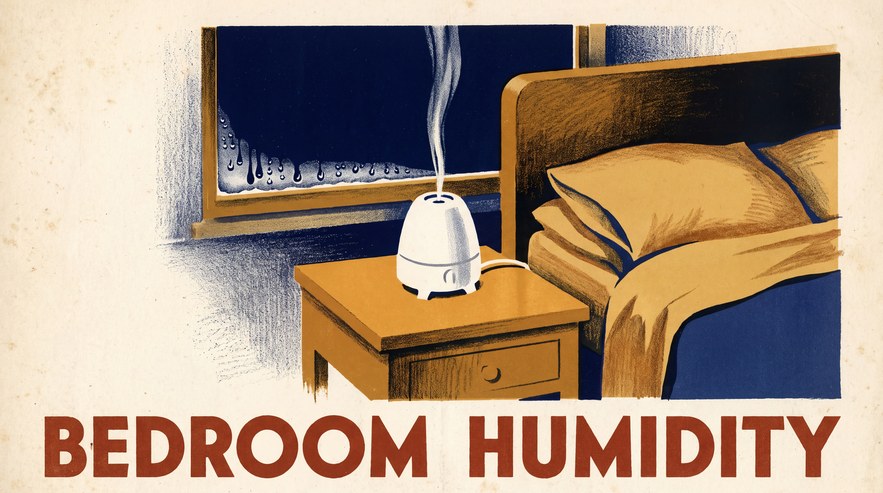
A shut bedroom gains water vapor all night from the people breathing in it, so its humidity reading tends to climb toward morning. Its air and window glass cool at the same time. Relative humidity compares the water vapor in the air with the most that air could hold at its current temperature, and cooler air holds less. Breathing, bathing and cooking all add moisture to a closed room (UMN Extension). The EPA says indoor relative humidity should stay below 60 percent, ideally between 30 and 50 percent (EPA, Mold Course Chapter 2).
How do you read a VOC reading, and what does a new mattress emit?
A home VOC monitor gives you one number for a mix of many gases, and the low-cost sensors in most units cannot turn that mix into a true concentration. Lab work fills in the other half. In a University of Texas study, new crib mattresses released about four times as many VOCs as old crib mattresses (UT Austin).
Dust mites need 70% humidity, so what does that mean for your bedroom?
The 70% figure comes from lab studies of how house dust mites keep water in their bodies. People often repeat it as if mites switch on at 70% and off below it. The research describes a slope, not a switch, and that slope runs through the humidity range many bedrooms reach in a humid summer. This guide turns those studies, plus the advice on 8 US health pages, into a number you can check on a hygrometer.
How does the room's temperature work against your body's overnight dip?
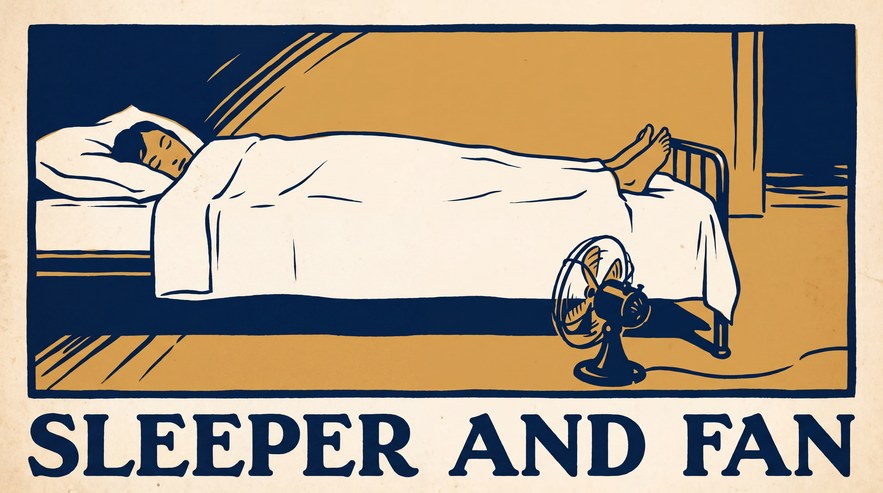
A bedroom can slow or speed the body's overnight cooling, because the core sheds its heat through the skin into the room's air. The hands and feet warm by about 1°C around the moment of falling asleep (smart bed skin temperature study). A warm, damp room or a heavy bed narrows the gap that heat has to cross, and the dip stalls.
Room check
Six questions that point to the likeliest cause of a bad night in the room.
About this publication
What does a bedroom do to a sleeper overnight?
A closed bedroom changes across a night: the air cools or warms, humidity and carbon dioxide build, and light and sound arrive on their own schedule.
Outdoor air keeps cooling toward a low near dawn, a shut room holds the moisture and carbon dioxide of everyone breathing in it, and street light and early sun reach the bed whether anyone is awake or not. None of this is visible from the pillow, and most of it can be checked with an inexpensive meter.
This publication collects what sleep studies, health agencies and building researchers such as the EPA publish about those conditions, and what that means for a person trying to sleep.
Which conditions are worth checking at home?
Four: the air temperature at the pillow, relative humidity, stale air in a shut room, and the light and sound that wake people.
The overnight curve rather than the thermostat setting, and the ranges health services publish.
What a closed door does across eight hours, where condensation starts, and the band agencies advise.
How carbon dioxide builds in a shut bedroom, and the 2025 ASHRAE-sponsored review that set a target for it.
Light at the pillow before dawn, and the noise peaks that wake a sleeper.
How does this site reach its figures?
By reading published studies and agency guidance, and by counting what sources state. No instrument has been run in any room for this site.
Every figure is linked to the page it came from, in the sentence that uses it, so any number can be checked against its source. Where a common claim about bedroom air turns out to be unsupported, the page says so in the sentence that carries the claim. The method page sets out the rules.