Guides
Guides are collected here as they appear, newest first.
Updated .
What is here so far?
The full list, latest entry first: 10 guides in all.
Each guide states its sources in the sentence that uses them, and any count it makes says how many documents were read and on what date.
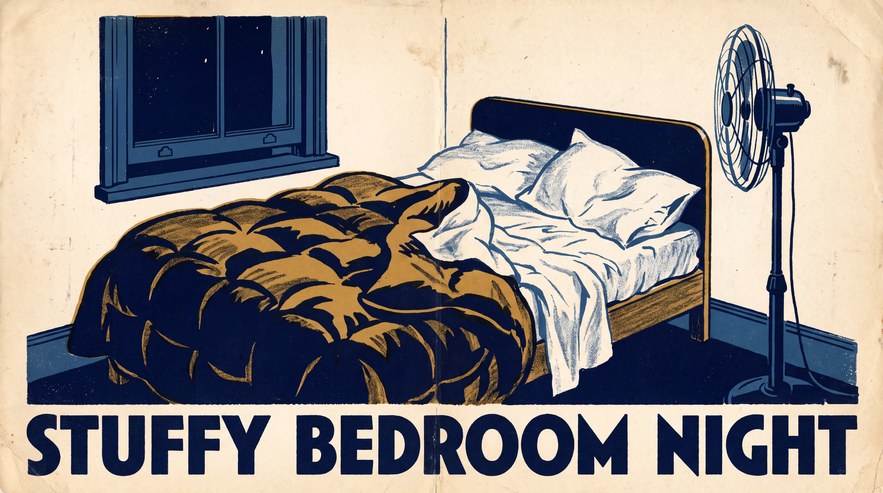
What in a bedroom makes you wake up hot in the middle of the night?
When you wake up hot in the small hours, the cause can often be found in the bedroom before you start looking for one in the body. Sleep labs, home studies and building surveys point to the same few sources. The room air climbs past about 77°F, a pocket of warm, damp air gets trapped under the covers, the people in the bed give off heat, and walls and roofs release the day's warmth after dark. In one Boston study of 50 older adults, sleep efficiency fell 5 to 10% as bedrooms warmed from 77 to 86°F (Neuroscience News, 2023).
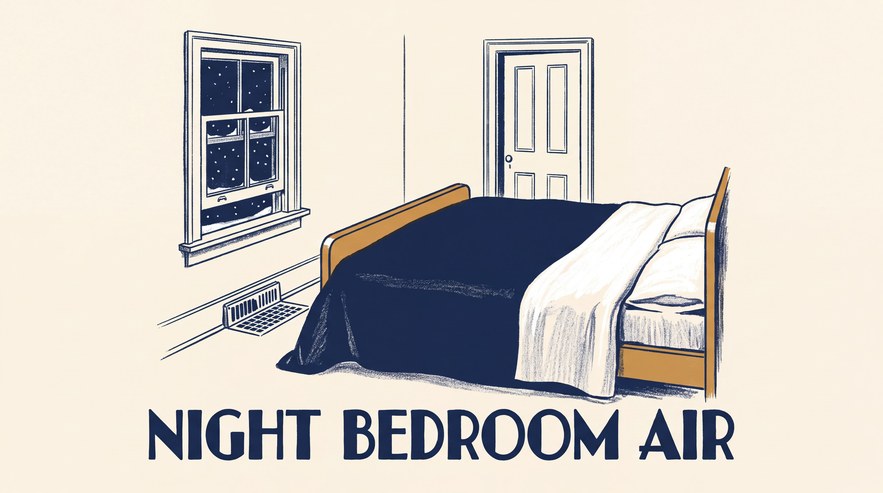
When is the coldest time of night, and what does bedroom air do between midnight and 5am?
On a clear, calm night the coldest time comes shortly after sunrise, not in the middle of the night. It usually lands 15 to 30 minutes after the sun is up. Until then, bedroom air answers to three pulls: the cooling outdoors, the heating schedule and the sleepers' own heat.
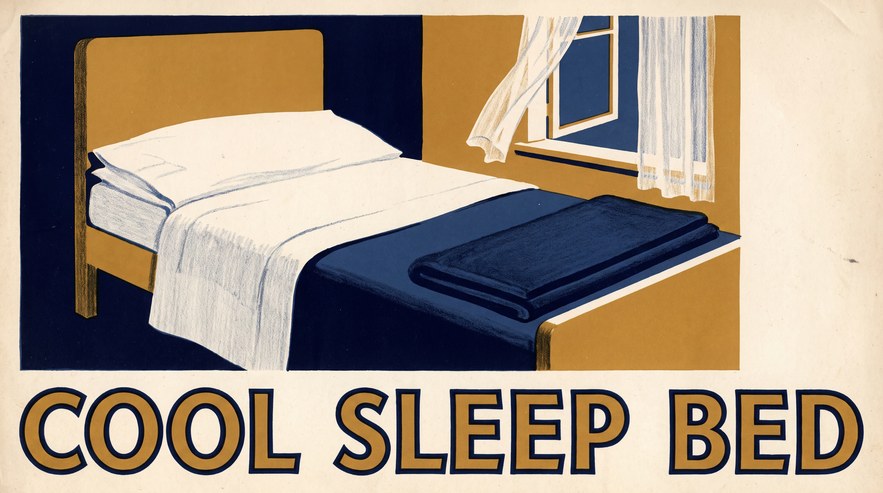
What bedroom temperature do sleep studies and health agencies point to?
Health agencies, hospitals and sleep studies point to a cool bedroom, and nearly every adult figure they publish falls between 60 and 68°F. This page sets those figures side by side for adults, older adults and babies. It converts them to Fahrenheit and shows where the sources part ways, so the number you set on the thermostat has a named source behind it.
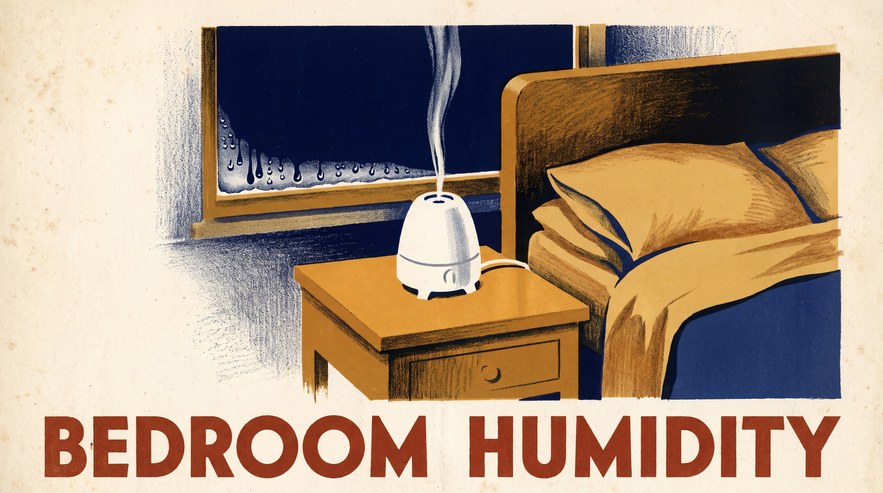
How does bedroom humidity change overnight, and what range do agencies publish?
A shut bedroom gains water vapor all night from the people breathing in it, so its humidity reading tends to climb toward morning. Its air and window glass cool at the same time. Relative humidity compares the water vapor in the air with the most that air could hold at its current temperature, and cooler air holds less. Breathing, bathing and cooking all add moisture to a closed room (UMN Extension). The EPA says indoor relative humidity should stay below 60 percent, ideally between 30 and 50 percent (EPA, Mold Course Chapter 2).
How do you read a VOC reading, and what does a new mattress emit?
A home VOC monitor gives you one number for a mix of many gases, and the low-cost sensors in most units cannot turn that mix into a true concentration. Lab work fills in the other half. In a University of Texas study, new crib mattresses released about four times as many VOCs as old crib mattresses (UT Austin).
Dust mites need 70% humidity, so what does that mean for your bedroom?
The 70% figure comes from lab studies of how house dust mites keep water in their bodies. People often repeat it as if mites switch on at 70% and off below it. The research describes a slope, not a switch, and that slope runs through the humidity range many bedrooms reach in a humid summer. This guide turns those studies, plus the advice on 8 US health pages, into a number you can check on a hygrometer.
How does the room's temperature work against your body's overnight dip?
A bedroom can slow or speed the body's overnight cooling, because the core sheds its heat through the skin into the room's air. The hands and feet warm by about 1°C around the moment of falling asleep (smart bed skin temperature study). A warm, damp room or a heavy bed narrows the gap that heat has to cross, and the dip stalls.

How do you keep a bedroom dark with curtains or shades?
A bedroom stays dark when light is stopped at the edges of the window, because blackout cloth already blocks nearly all the light that reaches it. The glow before dawn is usually a fitting problem. It comes from the gap over a curtain rod, the strip beside a shade or the split between two panels. Curtains and shades are treated together here, since your bedroom may well end up needing a little of each.

Does white noise help you sleep, and how should you set it up?
Most people reach for white noise because of something outside the bedroom: a bus route, a shared wall, a partner on a different schedule. The research answers a narrower question than the marketing does, and the useful part of that answer covers volume, placement, and the sound you are covering.
How do you ventilate a bedroom in winter without losing the heat?
On a cold night a closed bedroom stays warm by giving up its fresh air. Two people breathing for eight hours in a small sealed room can push carbon dioxide well past the level that sleep researchers now link to worse sleep. The fix is a small, steady flow of outdoor air, sized to the number of sleepers and warmed on its way in.