Which blackout shades keep a bedroom dark at night?
Updated .
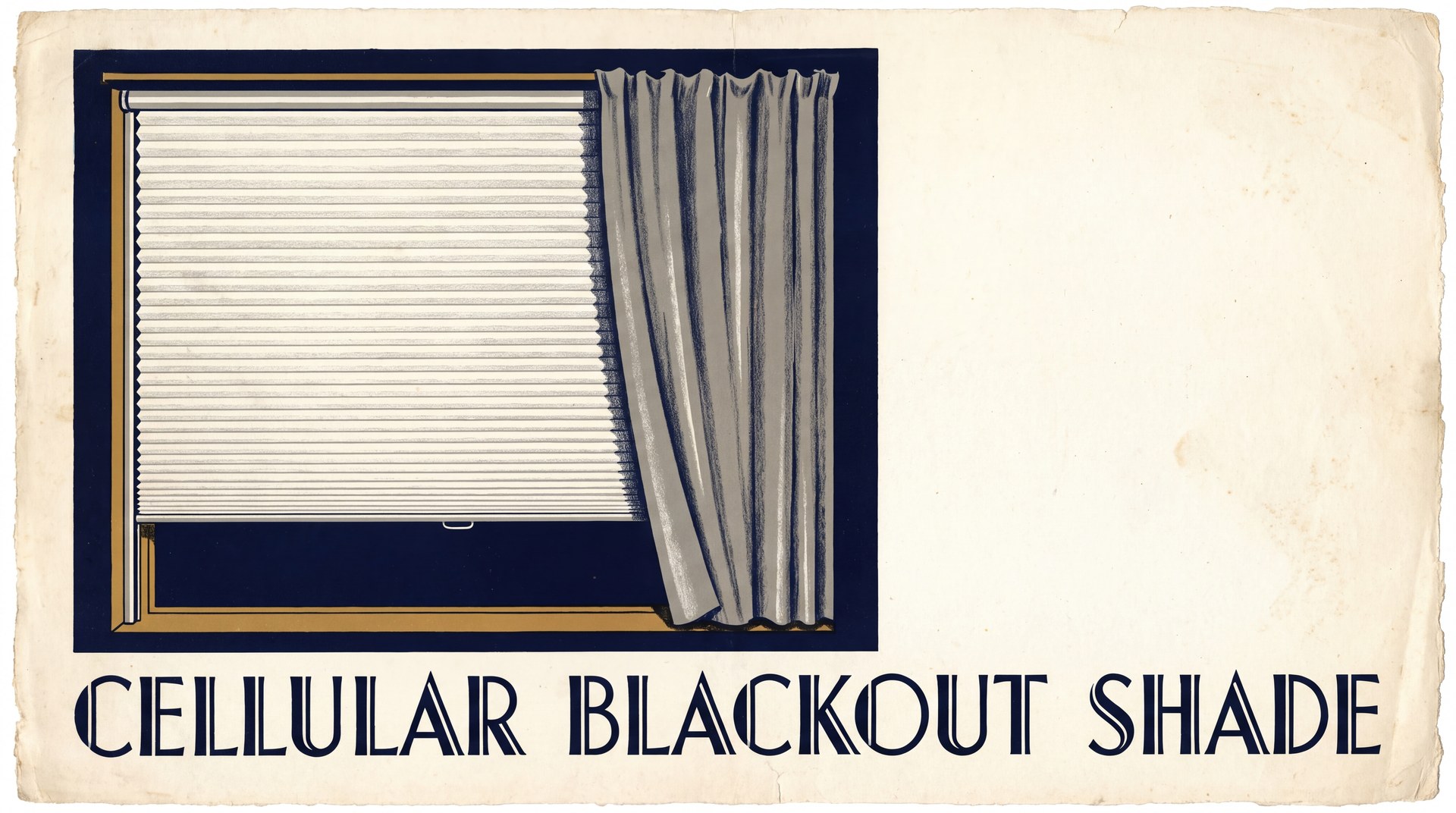
A blackout shade should keep a bedroom dark whether the light outside comes from a streetlamp, a neighbor's porch light or an early summer sunrise. Most blackout fabrics stop nearly all the light that hits them, going by the seller pages counted below, so fit around the window usually decides how dark the bedroom gets.
Short answer: Choose a shade with a blackout backing, then put your effort into the edges. Standard blackout shades leave a clearance gap of ⅛ to ½ inch (Canisteo Blinds), and a gap that small matters because lab work found the average person's melatonin halved at 24.60 lux (Phillips et al., 2019). Mount the shade outside the frame with 2 to 3 inches of overlap per side (TWOPAGES), or fit side channels, and hang a blackout curtain over it if you sleep by day.
This guide is for: people choosing shades or blinds for a bedroom who want it dark enough to sleep through streetlight, an early sunrise or daytime sleep after a night shift.
Key Takeaways
Three points carry most of the decision, and each one comes from a study, a federal rule or a seller's own page that we read and cite.
- Light at the edges matters more than the fabric. Standard blackout shades leave a clearance gap of ⅛ to ½ inch (Canisteo Blinds), and the average dose that halved melatonin in one lab study was 24.60 lux (Phillips et al., 2019).
- Mount outside the frame with 2 to 3 inches of overlap per side, or add side channels, to close most of that gap (TWOPAGES).
- Of 10 seller pages we read, 3 claimed both total darkness and a figure below 100%, so treat any percentage as a claim about the fabric and not about your room.
On This Page
The eight sections below follow the order most people decide in: how dark, what labels mean, where light leaks, then type, fit and safety.
How dark does a bedroom need to be for sleep?
Darker than most people think: in a 2019 lab study, 10 lux delayed melatonin, and a 2022 study linked 100 lux during sleep to higher heart rate.
The clearest evidence comes from lab studies of melatonin, the hormone that rises in the evening and tells the body it is night. Adults who spent the hours before bed in ordinary room light started making melatonin later, and made it for a shorter night, than when they sat in dim light (Gooley et al., JCEM 2011). A later study exposed fifty-five adults aged 18 to 30 to a range of evening light levels, and the average person's melatonin was cut in half at 24.60 lux (Phillips et al., 2019). People hit that point anywhere from 6 lux to 350 lux, and light at 10, 30 and 50 lux delayed melatonin onset by 22, 77 and 109 minutes.
Light during sleep also matters. Healthy adults who slept one night under 100 lux of room light had a higher heart rate overnight and more insulin resistance the next morning than people who slept below 3 lux (Mason et al., 2022).
These studies used lamps inside a laboratory, not streetlight slipping past a shade. They show which way to go without giving an exact target. In practice, any light bright enough to make out the furniture is worth blocking. Nobody can know their own sensitivity in advance, because the 2019 team found more than a 50-fold difference in sensitivity from one person to the next (Phillips et al., 2019).
What does blackout mean on a shade listing?
Less than it sounds: test methods differ on what blackout means, and the seller pages we read mixed 100% and 99% claims freely.
Two published test methods, Japan's JIS L 1055 and the American AATCC TM203, define light blocking in different ways, so a fabric rated 99.99% blackout under one can be rejected as translucent under the other (Begoodtex, 2025). Sellers rarely say which method, if any, stands behind their figure, so a percentage on one listing can't be compared with a percentage on another.
We read 10 seller product pages for blackout roller and cellular shades on September 26, 2026, and counted what each one said about how much light it blocks. This is a count of words on published pages. Nothing was hung or tested here, and our method page explains how we count.
| What the page claimed | Pages | Pages counted |
|---|---|---|
| Total darkness only (100%, "all" or "complete") | 4 | IKEA TRETUR, IKEA FÖNSTERBLAD, LazBlinds, Joydeco |
| A figure below 100% only (99% to 99.9%) | 3 | Blindsgalore, Factory Direct Blinds, EcoSmart |
| Both total darkness and a lower figure | 3 | Amazon listing, sage, Amazon listing, linen, SelectBlinds |
Six of the 10 pages said somewhere in their text that light can get past the edges or over the top. Across listings, those warnings are the most useful lines, because they describe the room and not the fabric.
Why do blackout shades still leak light at the edges?
Because a shade must be narrower than the opening it moves in, and the gaps at its sides, top and bottom let in light the fabric never sees.
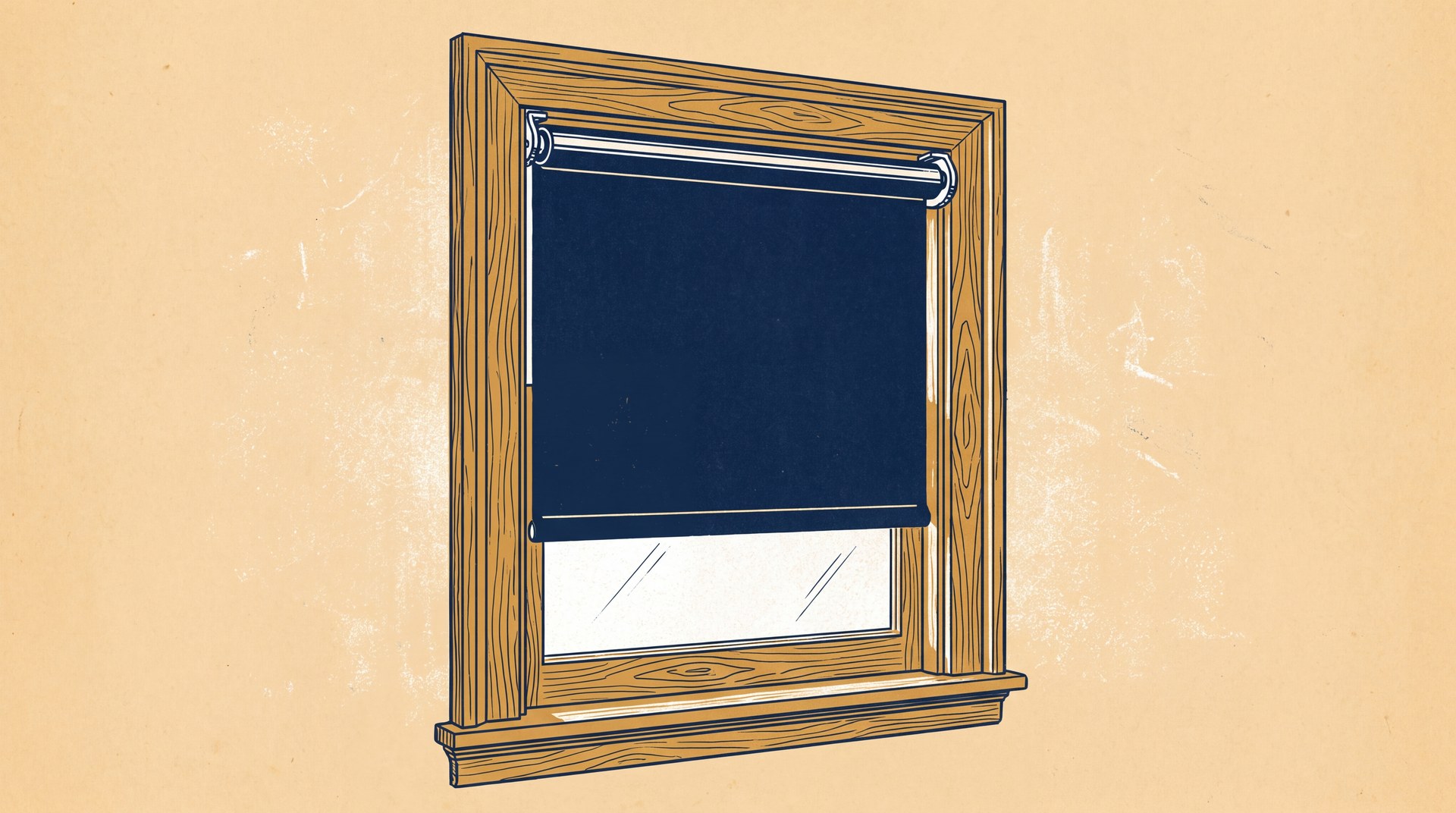
An inside-mounted shade sits within the window frame, and it has to clear the frame to move up and down. One blinds retailer says standard blackout shades leave a ⅛ to ½ inch gap for clearance, and that side tracks seal the edges against the window casing (Canisteo Blinds). Roller shades add a second leak at the top, where the fabric wraps around its tube, and another seller offers a cassette valance partly to block that sliver (Factory Direct Blinds). A third says that even with fabric that blocks 99% of light, you can expect leakage along all 4 edges (EcoSmart Shades).
Half an inch sounds trivial until you picture it running the full height of the window. From the bed at night, those two thin strips can be the brightest things in the room.
| Where light gets in | Why it happens | What closes it |
|---|---|---|
| Both sides | Inside mounts are made narrower than the opening | Side channels, or an outside mount with overlap |
| Top | Roller fabric wraps around an open tube | Cassette valance or a cover panel |
| Bottom | Shade stops short of an uneven sill | Full-length order; outside mount past the sill |
| Through the fabric | Thin or unbacked cloth | Blackout backing or lining |
Which type of blackout shade keeps a bedroom dark?
A cellular or roller shade with side channels comes closest; slatted blinds are the weakest choice because light passes between the slats.
The grades below are our judgement. We built them from the gap sizes and edge warnings that sellers publish, not from anything measured here. They compare setups rather than products and assume blackout-backed fabric throughout, because in a bedroom fit decides more than fabric.
| Setup | Main leak | Our grade for a bedroom |
|---|---|---|
| Slatted blinds, including faux wood | Between slats and through cord holes | Dim at best; not a blackout choice |
| Roller shade, inside mount | Both sides and over the roll | Dark center, bright edges |
| Cellular shade, inside mount | Narrow gaps at both sides | Close to an inside roller |
| Lined Roman shade, outside mount | Sides, if overlap is small | Good with generous overlap |
| Roller or cellular, outside mount with overlap | Small leaks at sides and top | Dark enough for most night sleepers |
| Roller or cellular in side channels | Little left at the edges | Darkest shade-only setup |
| Any shade plus a blackout curtain | Very little | Darkest overall; plan on it for day sleep |
Add-on side channels are sold for shades already hanging in the window, so you can upgrade later without replacing the shade (Sleepy Time Tracks). If you sleep during the day, plan for the last row from the start, because in our judgement a single layer rarely handles direct sun on a bright window.
Should you mount blackout shades inside or outside the window frame?
Outside, if darkness is the goal: a shade that overlaps the frame by 2 to 3 inches per side covers the gaps an inside mount leaves open.
An inside mount looks tidy and shows off the window trim, but it guarantees the side gaps described above. An outside mount fixes the shade to the wall or trim above the window and makes it wider than the opening. One seller's measuring guide recommends adding 4 to 6 inches to the width, or 2 to 3 inches on each side, to reduce light leakage (TWOPAGES). The same guide suggests mounting the shade 10 to 12 inches above the frame, where space allows, so the rolled-up shade sits on the wall and not over the glass.
Measure the width at the top, middle and bottom of the trim, and use the largest number, because windows are rarely square (SenseBlinds). An outside-mount shade is made to the exact size you order, so the overlap has to be in the width you enter (Beyond Shades).
Some shades cannot be trimmed. IKEA says its TRETUR blind can't be cut and supplies a cover panel so it can still block light when mounted inside the frame (IKEA). The FÖNSTERBLAD blind can be cut to width at home, which helps when you need a shade to fit a particular space (IKEA).
Are blackout shades or blackout curtains better for a bedroom?
Neither wins alone: a shade seals the glass and a curtain covers the edges, so the darkest bedrooms usually use one of each, layered.
A shade sits close to the glass and stops light before it spreads, but it leaves the gaps described above. A curtain hung wide and high does the opposite. It can overlap the wall by several inches, yet light spills over the rod and under the hem. On curtains, one installation guide advises extending the rod 6 inches past each side of the frame, 12 inches in total, to block the path light takes around the panel (Home to Sight).
Layering covers each one's weak point with the other's strength. The shade blocks most of the light at the glass, and the curtain catches what escapes around the shade's edges. If you rent and can't drill side channels into a frame, adding a curtain is also the simplest fix. Our companion guide on choosing blackout curtains for a bedroom covers rods, wraparound fittings and linings.
| Question | Blackout shade | Blackout curtain |
|---|---|---|
| Where it seals | At the glass | Around the window, on the wall |
| Typical leak | Sides and top of the shade | Over the rod and under the hem |
| Good alone for | A dark room at night | A room where you can't drill the frame |
| Best paired with | A curtain over it | A shade behind it |
Are cordless blackout shades required for child safety?
Stock shades sold off the shelf in the US must be cordless or keep cords out of reach, and made-to-order rules tightened in 2024.
Window covering cords are a strangulation risk for young children, and US rules have tightened around them. Since December 28, 2022, the Consumer Product Safety Commission has treated stock window coverings with hazardous operating cords as a substantial product hazard (Federal Register, 2022). A 2022 summary of the stock requirements says operating cords must be cordless, inaccessible, or eight inches or shorter in any position (SBA Office of Advocacy).
Custom shades have become safer for a child's room as well. The industry standard ANSI/WCMA A100.1-2022, in effect since June 1, 2024, removed free-hanging operating cords from made-to-order products (Window Covering Safety Council). The rules are still changing. On September 24, 2026, the CPSC proposed further amendments and will take written comments until November 23, 2026. Its staff put overall compliance among the products they reviewed at about 91 percent (Federal Register, 2026). For a parent, that means most shades on sale meet the rules, but a quick check for loose cords is still worth doing before one goes up near a crib.
In a bedroom, the simple choice is a cordless lift, a wand or a motor. If a child sleeps in the room, check that no cord or bead chain hangs within reach of the bed or crib.
Do blackout cellular shades help with heating and cooling?
Yes, when fitted tightly: the Department of Energy says snug cellular shades can cut window heat loss by 40% or more in heating seasons.
The honeycomb pockets in a cellular shade trap air, which slows the heat moving through the glass. A seller summarizing Department of Energy guidance reports that tightly installed cellular shades can cut heat loss through windows by 40% or more, about 10% of heating energy, and can reduce unwanted solar heat by up to 60% in cooling seasons (Blindster). Another retailer's summary adds that cellular shades running in side tracks do the most to raise a window's R-value (Budget Blinds Tempe).
That suits a bedroom well, because the fix that darkens the room also insulates it. Side channels close the light gap and the air gap in one step. A DOE-backed resource also warns that interior insulating shades can let condensation or frost form on the glass in winter, which can lead to peeling paint, trim damage and mold (Building America Solution Center). If your windows fog up behind a closed shade, raise it for part of the day.
We found no comparable DOE figure for blackout roller shades, which are a single sheet with no trapped air. Treat any seller's insulation claim for them as unverified until you see a tested rating.
Common questions
These are short answers to the questions people ask most often once they have picked a shade type, from budget options to rentals and night shifts.
Are room-darkening and blackout shades the same thing?
Sellers use the two terms loosely, so read the listing itself. Room-darkening fabric usually lets a faint glow through, while blackout fabric has a backing meant to stop it. Check whether the page gives a figure and whether it mentions edge gaps.
Can I add side channels to a shade I already own?
Usually, yes. Add-on channels are sold for most roller and cellular shades, and one maker says its slim version needs only a 1/4 inch side gap (Sleepy Time Tracks). Measure your gap before you order.
What works for renters who cannot drill?
Some roller shades install without drilling. One listing describes a trim-to-fit shade that goes up with no screws or brackets (LazBlinds). Hang a curtain over it to cover the edges.
Do blackout shades block noise too?
We found no measurements of this for shades. If street noise wakes you, a steady sound source may help more, and our guide on white noise for sleep explains how to set one up.
What should night-shift workers do?
Plan for two layers from the start: a shade in side channels or mounted outside the frame, with a blackout curtain over it. Even one night of sleep under 100 lux raised heart rate in a lab study (Mason et al., 2022).
How much should I spend?
Spend on fit before fabric. In our judgement, a modest shade mounted outside the frame with generous overlap will leave a room darker than an expensive shade mounted inside the frame with open edges.
Sources
Night Air's reading for this piece, in the order it is cited, each with the question it helped answer.
- Canisteo Blinds (canisteoblinds.com), helped answer “Key Takeaways”; “Why do blackout shades still leak light at the edges?”.
- Phillips et al., 2019 (pmc.ncbi.nlm.nih.gov), helped answer “Key Takeaways”; “How dark does a bedroom need to be for sleep?”.
- TWOPAGES (twopagescurtains.com), helped answer “Key Takeaways”; “Should you mount blackout shades inside or outside the window frame?”.
- Gooley et al., JCEM 2011 (rrmacademy.org), helped answer “How dark does a bedroom need to be for sleep?”.
- Mason et al., 2022 (pubmed.ncbi.nlm.nih.gov), helped answer “How dark does a bedroom need to be for sleep?”; “Common questions”.
- Begoodtex, 2025 (begoodtex.com), helped answer “What does blackout mean on a shade listing?”.
- IKEA TRETUR (ikea.com), helped answer “What does blackout mean on a shade listing?”; “Should you mount blackout shades inside or outside the window frame?”.
- IKEA FÖNSTERBLAD (ikea.com), helped answer “What does blackout mean on a shade listing?”; “Should you mount blackout shades inside or outside the window frame?”.
- LazBlinds (amazon.com), helped answer “What does blackout mean on a shade listing?”; “Common questions”.
- Joydeco (joydeco.com), helped answer “What does blackout mean on a shade listing?”.
- Blindsgalore (blindsgalore.com), helped answer “What does blackout mean on a shade listing?”.
- Factory Direct Blinds (factorydirectblinds.com), helped answer “What does blackout mean on a shade listing?”; “Why do blackout shades still leak light at the edges?”.
- EcoSmart (ecosmartshades.com), helped answer “What does blackout mean on a shade listing?”; “Why do blackout shades still leak light at the edges?”.
- Amazon listing, sage (amazon.com), helped answer “What does blackout mean on a shade listing?”.
- Amazon listing, linen (amazon.com), helped answer “What does blackout mean on a shade listing?”.
- SelectBlinds (selectblinds.com), helped answer “What does blackout mean on a shade listing?”.
- Sleepy Time Tracks (sleepytimetracks.com), helped answer “Which type of blackout shade keeps a bedroom dark?”; “Common questions”.
- SenseBlinds (senseblinds.com), helped answer “Should you mount blackout shades inside or outside the window frame?”.
- Beyond Shades (bshades.com), helped answer “Should you mount blackout shades inside or outside the window frame?”.
- Home to Sight (hometosight.com), helped answer “Are blackout shades or blackout curtains better for a bedroom?”.
- Federal Register, 2022 (federalregister.gov), helped answer “Are cordless blackout shades required for child safety?”.
- SBA Office of Advocacy (advocacy.sba.gov), helped answer “Are cordless blackout shades required for child safety?”.
- Window Covering Safety Council (windowcoverings.org), helped answer “Are cordless blackout shades required for child safety?”.
- Federal Register, 2026 (federalregister.gov), helped answer “Are cordless blackout shades required for child safety?”.
- Blindster (blindster.com), helped answer “Do blackout cellular shades help with heating and cooling?”.
- Budget Blinds Tempe (budgetblinds.com), helped answer “Do blackout cellular shades help with heating and cooling?”.
- Building America Solution Center (basc.pnnl.gov), helped answer “Do blackout cellular shades help with heating and cooling?”.